Showing posts with label writing quotes. Show all posts

Friday, April 19, 2013

Writing quote XVI


I want to do a piece where I go to the Alps and talk to a mountain. The mountain will talk of things which are necessary and always true, and I shall talk of things which are sometimes, accidentally true.  

(Bas Jan Ader, Dutch performance and conceptual artist)

Ader’s body of work is not large in volume – a few photographs, a handful of short films – but to many in the artistic community his work is considered profound, especially when one looks at his personal story and his deep grief around the death of his father, wh
o was executed by the Nazis for harbouring Jews when Ader was a very young child.

When Ader was 33 years old, he packed a tiny sailing boat with a few supplies and set out to sail solo from Cape Cod to the other side of the Atlantic. Ten months later his yacht was found drifting, but his body was never recovered, leading to speculation: did he fall victim to his own harebrained scheme, was he literally on a suicide mission, or did he simply expect to probably fail, thus turning his final voyage into his ultimate piece of performance art?

I thought of Ader when I was watching German Wanderlust, a BBC2 documentary by Julia Bradbury. In it, she visits one of Ludwig II’s hunting lodges near Neuschwanstein in Bavaria. The proprietor of the place, which stands in the shadow of a great mountain, owns a number of old photographs of the lodge taken in the time of Ludwig. Showing her one, he says, with typically Teutonic dryness, ‘This is the house - you’ve seen it [as you were] coming up. It’s quite different now, because the roof is very different.’ Then he points at the mountain in the photograph. ‘[But this] is the same mountain, because mountains don’t change every two hundred years.”

The natural world isn’t permanent – we know this all too well. But some aspects of it change more slowly than others. Under most circumstances, a snowflake is far more delicate than a tree. Glaciers are slow but measurable, the ocean permanent but far from still. But significant geological formations like mountains are perhaps more permanent – more solid, if you like – than pretty much anything else in the natural physical world.

To Ader, the Alps offered solid emotional and philosophical grounding that spoke of permanence. He needed to hear that, to be reminded that there are truths beyond what we understand. His contribution to this conversation would be one of subjectivity, humility and accidental enlightenment. 

Thursday, March 28, 2013

Writing Quote XV


It is by sitting down to write every morning that one becomes a writer. Those who do not do this remain amateurs.

Gerald Brenan (British author and historian)


Seems obvious, doesn’t it? I can’t tell you how many times people, on learning what I do, have said, ‘Oh, I’d love to write a book!’ To which the obvious, if not slightly antagonistic response would be, ‘Would you like me to lend you a pencil?’

What we writers do is a seductive proposition. At its core, our lot is to tell stories – lies, even – for a living. We get to make things up, say what we think, research topics that interest us, create worlds, play God for a season, discover wonders we might never have discovered otherwise. And at the end of that, the fortunate amongst us see our work produced and handed over to an audience, at which point the tight shoulders and long nights and innumerable cups of coffee are magically forgotten. Yes indeed, it’s a very seductive proposition.

But it doesn’t come easily. It very rarely happens by accident. Like anything that’s worth having, it takes serious work to acquire and maintain.

There’s nothing wrong with being an amateur. After all, an amateur has something no professional has – the option of walking away when it gets too hard.

So, which are you?

Thursday, January 17, 2013

Writing quote XIV


I have a critical nature, in the sense that when I look at something I often look for the flaws. 

Donald Fagen 


At first glance, this quote might suggest that Donald Fagen is a negative person, and perhaps he is – I’ve never met him. What I do know is that I love his music, and the music he's made over the years with Walter Becker, under the name Steely Dan.

In one sense, when he speaks of looking for flaws, Fagen could be speaking about the idea that comes up all the time in any art-form – that without pain, or flaws, or loss, or imperfection, there is no art. A perfect relationship offers very little to sing about, unlike a broken heart. 

However, I think I prefer to look at this quote as a reflection on the way a raw idea is turned into a rough representation then, after close attention to the flaws, it reaches a state approaching perfection. Anyone who has ever listened to a Steely Dan song or any of Donald Fagen’s solo work will immediately recognise the attention to detail. Even if the kind of music Fagen writes and performs isn’t quite your bag, what's indisputable is that he values perfection as much as if not more than any other single element. Whether he’s looking for the perfect production, the perfect chord, or the perfect phrasing, he’s always looking. Steely Dan concerts are renowned for the quality of the mix, and I’m sure it’s because Fagen would settle for nothing less. Famously, on the classic 1977 album Aja, finding just the right drummer for each track was such a priority that six different drummers were employed on seven tracks.

The editing process isn’t a single step. It’s a long process, where you get to the end, then turn back to the first page and begin again. Over and over, looking at structure this time, consistency of voice the next, a particular character after that, then how that has affected structure. Yes, by all means we should strive for perfection, but as well as admiring the greater shape and form, we shoudn't forget to look for the flaws.

Saturday, December 29, 2012

Writing quote XIII


Times are bad. Children no longer obey their parents, and everyone is writing a book.
Marcus Tullius Cicero (Roman philosopher, statesman and orator – b. 3 January, 106BCE)*


So, it seems that even two thousand years ago parents despaired that their kids’ generation would be the downfall of society, that everything that they’d worked for would be swept aside by the narcissism and self-importance of the ‘modern youth’.

What does this tell us? Simply, that people are the same now as they’ve ever been. The same things drive them to behave the way they do now as they ever did – lust, greed, power, fear, love.

But there’s more. Look at the last part of the quote: ‘…everyone is writing a book.’ Really? More than two thousand years ago, people were reading books, laying them down when they’d finished and saying to themselves – and each other – ‘Huh! I could do that!’

Of course, the publishing mechanisms were very different then. The printing press was still more than 1,500 years away, e-readers more than five hundred beyond that. Even so, it would seem that there were people in Ancient Rome who believed that they had something worth saying. That their words were worthy of preservation. That their views deserved to be heard just as much as those of anyone else. And of course, there would have certainly been those who felt that they were absolutely entitled to any success that came their way.

It’s probably safe to assume that there were people being ‘published’ back then who were hacks. Perhaps they got their big break because of family connections, or because they just managed to jump on the crest of a zeitgeist. Perhaps they slept with the editor. And by that same token, we can be confident that there were some remarkable writers mooching around Rome who never quite got that break, no matter how undeniable their talent.

And now we're all writing books. Not everyone should, perhaps, but if we want to, we can. One of the freedoms we hold most dear is the ability – the liberty – to express ourselves. The truth is, no one has the right to tell you that your creative dream is frivolous or worthless or silly or unattainable. But at the same time, no one is entitled to success. 

So go ahead and write that book, but keep in mind that you’re not the only one doing so. Which means all you can do is work hard to make your writing better than everyone else’s, and hope for the best.


* This quote is somewhat apocryphal. It’s usually attributed to Cicero; however, unlike most of his other quotes, no one seems to be able to name the work from which is taken. The other possible sources include an Egyptian priest, an Assyrian clay tablet, and a stone inscription from Turkey. But since these supposed sources are much older (2,000 to 5,000 years older, in fact) than Cicero’s relatively recent observation, that simply reinforces the point I’m making. For more, go here: http://quoteinvestigator.com/2012/10/22/world-end/

Tuesday, April 19, 2011

Writing quote XII

The faster I write the better my output. If I'm going slow I'm in trouble. It means I'm pushing the words instead of being pulled by them.
(Raymond Chandler)

To some extent, this is why I write the way I do; unplanned, at least at the very early stages. To plan and follow the blueprint is, for me, rather unadventurous. Ergo, it's also pretty boring. I'd never heard it put the way Chandler put it here, but I think I get it. Pushing words means that you're forcing something to happen. You're being the primary agent for change, or for creativity. And of course, the urge to scratch that itch to create something is why we do what we do. But I think there has to more than that. There has to be the feeling of being taken on the ride with the characters. Because if we can't inspire ourselves to invest in our characters and their journey, what hope do our readers have?

Tuesday, September 22, 2009

Writing Quote XI

Better to write for yourself and have no public, than to write for the public and have no self.
(Cyril Connolly)

Of course, what most of us aspire to be is the writer Cyril Connolly doesn't mention – the one who can write for themselves and for the public. But take a stroll around most bookshops, and it becomes pretty obvious that quality and popular are often poles apart.

In my school author talk, I always grab any opportunity to have a bit of a fun dig at the Twilight phenomenon. Yes, yes, I know that many young people who might never have picked up a book are reading Stephenie Meyer. We heard the same thing with Harry Potter. And this dig of which I speak (good-natured though it be) is often thrown back at me – usually by incensed teenaged girls – as professional envy. And sometimes the lines between that accusation and the truth can become blurry.

It would be very easy to be glib about this. 'I know money and success won't make me happy, but I wouldn't mind a chance to prove that theory for myself.' But the truth is, the uber-success of the Meyers and the Rowlings is what it is. As writers in a competetive marketplace, we choose to handle it the best way we can, which in my case is to remind myself that I am living my dream.

Recently a good friend (also a writer) had to remind me that negativity is infectious, and poisonous. And he's right. It's been the biggest single challenge of my writing career. And saying that I have no public is stretching things a little. I don't sell in vast quantities, but I sell. My books are in stores. I have some public. But I also know that I write for myself, and that's as important as anything else.

(If you're reading this via Facebook Notes: this post is redirected from my head vs desk blog.)

Monday, June 29, 2009

Writing quote X

He that uses many words for the explaining of any subject doth, like the cuttlefish, hide himself for the most part in his own ink.
(John Ray)

The end.

Thursday, June 18, 2009

Writing quote VIII (and IX)

Two quotes today, both from the inimitable Mark Twain, and both more or less about the same thing. Here's the first:

As to the adjective, when in doubt, strike it out.

And the second:

Substitute "damn" every time you're inclined to write "very;" your editor will delete it and the writing will be just as it should be.

That's damn good advice, don't you think?

Tuesday, June 9, 2009

Writing quote VII

Don't tell me the moon is shining; show me the glint of light on broken glass.
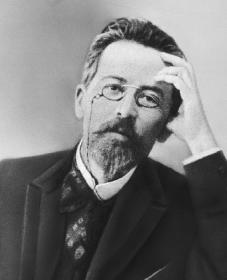
(Anton Chekhov)

Chekhov, regarded by many as one of the great writers of the short story, could be talking about a couple of things here. In fact, I'm almost certain he is. First, he's putting another angle on that age-old writing maxim, 'Show, don't tell'. This is a quote I often pull out in my workshops, because it's a perfect way to describe this important idea.

But I suspect he's also saying something about the use of sadness and personal imperfection in our writing. When he was thirty, Chekhov found a new passion and purpose in life: prison reform. His letters and observations from Sakhalin Island penal settlement in far east Russia are graphic depictions of human degradation, and amongst his most moving writing.

There's another Chekhov quote which I really like, but it's got more to do with the way we construct our stories. If the earlier quote is about showing rather than telling, this one is about foreshadowing:

If in Act I you have a pistol hanging on the wall, then it must fire in the last act.

Monday, May 25, 2009

Writing quote VI

Today's quote is from the German writer, Thomas Mann, as related by Clive James:

A writer is someone for whom writing is harder than it is for other people.

Clive James then goes on to say: "That line is perfect in every way. Not only is it perfectly written, but it's absolutely true. The only thing I've got better at as the years have gone by is I've grown more resigned to the fact that it comes hard. You realise that hesitation and frustration and waiting are part of the process, and you don't panic. I get a lot better at not panicking. I get up every morning early if it's a writing day and I will do nothing else but write that day. But the secret is not to panic if it doesn't come."

You can read the rest of Decca Aitkenhead's Guardian interview with Clive James here. And thanks to Shannon for the heads-up on this one.

Wednesday, May 13, 2009

Writing quote V

Today's quote is from John Grisham. Now, courtroom books aren't everyone's cup of tea, and I haven't read every book Grisham ever published, although those I have read, I've quite enjoyed, with his first, A Time to Kill being my favourite.

But I especially love Grisham's personal story, sitting in his car during his lunch break, writing his fiction longhand on yellow legal pads.

But my bestest most favouritist thing concerning John Grisham is this quote, which more or less describes why certain themes (such as bullying) seem to keep popping up in my own work.

The good thing about writing fiction is that you can get back at people. I've gotten back at lawyers, prosecutors, judges, law professors and politicians. I just line 'em up and shoot 'em.
(John Grisham)

Thursday, May 7, 2009

Anonymity Jones, and Writing Quote IV

It's finished, and is currently sitting in Leonie's inbox. Ah, wondrous day!

It was so tempting to stay in bed this morning, and sometimes I wonder if I'm burning out. I know that sounds dramatic, but having worked in a high stress healthcare career for almost twenty years, I think I'm qualified to identify the signs of burnout. The fact is, I've been pretty prolific over the couple of years. Not Jackie French prolific, just 250,000 words prolific. Hunting Elephants, The Gimlet Eye, the first in the Edsel Grizzler trilogy, and now Anonymity Jones, plus all the incidental stuff, articles etc. I've got several (10-ish) more projects lined up, but I also feel like I need a break.

The problem is, though, that if I'm not writing, everyone else is. And I'm aware of the collective weight of Other Stuff being written, and published, and bought. So this is why, after finishing a YA novel at 11pm last night, I'm now cracking my knuckles in preparation for something new.

The other day someone called me a 'word machine'. To which I replied, 'Yes, I churn out the words, but then a bunch of women in hair nets have to pick out the bent ones.'*

I learnt a long time ago that if I set myself a minimum amount of writing time per day, I can waste that so easily. There are so many distractions right here, contained within the 6 square metres of space that is my study, and at the end of an eight hour day, I'll have achieved very little in terms of actually writing anything. So my solution - which works very well for me, I might add - has been to set a word quota. 2,000 words a day. Minimum. Every day. And most days I achieve that, although lately I've been limiting myself to 1,000 words on weekends.

But how many bent words am I producing? I think that's an important consideration.

So, to the writing quote, this time from the British author and historian Gerald Brenan. And here's what he had to say about this:

It is by sitting down to write every morning that one becomes a writer. Those who do not do this remain amateurs.

* (No disrespect meant to any of the lovely publishers and editors with whom I work. As far as I'm aware, none of them wears a hair net.)

Tuesday, May 5, 2009

A writing quote III

I like pushing the form, over-reaching, going a little too far, just on the edge, sometimes getting your fingers burned. It's good to do that.

(Gay Talese)

Sunday, May 3, 2009

A writing quote II

A writer uses a journal to try out the new step in front of the mirror.

(Mary Gordon)

Friday, May 1, 2009

A writing quote

A writer's knowledge of himself, realistic and unromantic, is like a store of energy on which he must draw for a lifetime; one volt of it properly directed will bring a character alive.

(Grahame Greene)